Monday, 15 November 2021

It’s time for a conversation about justice, top Catholic scholar says
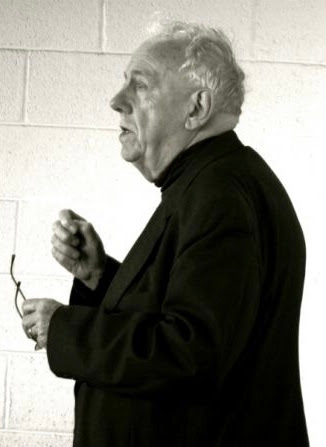
Famed ethicist Alasdair MacIntyre called upon academia and other Catholics and intellectuals to invest in the “expensive conversation” about justice, and to sharpen their understanding of what constitutes human dignity. MacIntyre, whose teaching career spans 70 years and includes some of the most important books on virtue ethics such as "After Virtue" and "Dependent Rational Animal," gave a reflection entitled “Human Dignity: A Puzzling and Possibly Dangerous Idea?” at the University of Notre Dame’s de Nicola Fall Conference Nov. 12. During the presentation, he argued that the modern term “human dignity” is doing the work that justice should be doing and that the current definition of human dignity and its implications have puzzling limitations. He posed the question of whether or not Hitler has human dignity— and if he does, what is he afforded by it? Can human dignity never be lost, MacIntyre asked. He analyzed the limits of the modern conception of human dignity, which differs starkly from the Thomistic understandings of "dignitas" advanced by the Belgian Thomist Charles De Koninck. According to this view, which MacIntyre asserted was a more accurate understanding of the term, human beings have dignity in virtue of what they can become--not because of the simple fact that they are persons. Accordingly, this means that human beings can also lose their dignity through sin. “A bad human being is worse than a bad animal,” he said. It also means that in order to live a dignified life, in addition to having access to basic needs such as food, clothing, and shelter, human beings must be given the chance to exercise virtues which ennoble their nature and bring it to its highest level of flourishing, MacIntyre said, adding that this requires a social restoration of the common good. MacIntyre critiqued pervasive individualist ethics, which often focus on negative prohibitions rather than the common good. He gave the example of a state that outlaws slavery, but does nothing other than allow them to live in “miserable freedom.” The elimination of evil did not ennoble the former slaves in the way it should, he argued, which is a problem of conceptualizing and seeking the common good. “One cannot have a care for human dignitas if we ascribe to political and social individualism,” he decried. MacIntyre also argued that a state that outlaws abortion, but then fails to provide basic medical and maternity care as well as economic provisions, exemplifies this same individualist ethos centered on eliminating negative prohibitions but not aimed at achieving the common good. His remarks come as the Supreme Court prepares to hear oral arguments in one of the most significant challenges to Roe v. Wade since its inception— Dobbs vs. Jackson Women’s Health Organization. Many believe Dobbs will overturn Roe. During a Q&A Nov. 12, several participants questioned MacIntyre’s assertion that human dignity be recognized in its potential form rather than by virtue of the fact that a human being is a human being, citing concerns for the implications on moral arguments against embryonic stem cell research. MacIntyre responded that too many are attempting to make the modern term human dignity— widely used in United Nations documents and constitutions in the post-war period because it allowed fighting political, religious, and philosophical factions to bridge unsurmountable gaps because of its lack of definition— to do the work that properly belongs to understanding the virtue of justice. Justice, which Aristotle defines as rendering to another person his due, is where answers to questions of embryonic stem cell research and torture properly belong, MacIntyre said. He said the dignity of an embryo, or of Hitler, lies in his or her potential and urged the attendees to have “expensive conversations” about the question “what is justice?” so they can better articulate what is owed to human beings. MacIntyre has often written about the loss of moral vocabulary and vision in today’s world. The philosopher considers this to be one of the biggest obstacles to allowing human beings to flourish, since the path to happiness through virtue is largely unknown. This was MacIntyre’s 20th contribution to the de Nicola Fall Conference on Ethics.

Monday, 18 October 2021

Pope Francis insists on right to conscientious objection for abortion refuseniks

h/t to Bioedge Health workers have a non-negotiable right to conscientious objection if they are asked to participate in an abortion, Pope Francis told a conference of hospital pharmacists this week. CO is actually “fidelity to your profession, if validly motivated,” he said. “Today there is something of a tendency to think that perhaps it would be a good way to approach conscientious objection,” he said. “But this is the ethical intimacy of every health professional and this should never be negotiated, it is the ultimate responsibility of health professionals. It is also a denunciation of the injustices done to the detriment of innocent and defenceless life.” However, he acknowledged the complexity of CO, which “requires both great competence and great rectitude”. And, pushing back against accusations that Catholic doctrine is harsh and unyielding, he said that “our duty is to be close to people, our positive duty: to be close to situations, especially women, so that they do not come to think of abortion as the solution.” The Pope, who is often viewed as a progressive because of his views on the environment, on greater tolerance of LGBTQI+ people, and on inflexible clergy, is still vehemently opposed to abortion. It was at least the third time in a month that Francis has denounced abortion, which has become a major political issue in many countries, especially the United States. In an in-flight press conference in September he declared: “Abortion is more than an issue. Abortion is murder … It’s a human life, period.”

Tuesday, 24 August 2021

Wisconsin bishops encourage vaccination while affirming conscience rights

Interesting article from CNA about the ethical issues of COVID vacinations and Conscience. The five bishops of Wisconsin on Friday issued a message encouraging vaccination against COVID-19, while maintaining that people ought not be forced to accept a COVID vaccine. “We encourage those eligible to receive the COVID-19 vaccine to do so because it is the most effective way to combat this virus. We are all morally responsible to protect our lives and the lives of others. This is an imperative of natural law that we treasure in our faith,” the bishops wrote. They also acknowledged “many health or ethical reasons why a person may refuse COVID-19 vaccination,” but added that “it is the responsibility of the individual” to explain their decision to decline the vaccine, and recommended that clergy not intervene in such cases. “However, the Church also treasures her teaching on the sanctity of conscience,” they stated. “Nobody should violate the sanctity of conscience by forcing a person to do something contrary to his or her conscience.” In cases of conscientious objection to the COVID vaccine, “[p]astors should not feel compelled to issue documentation recognizing this conscientious objection and are recommended not to do so,” the bishops stated. The bishops stressed that anyone refusing to be vaccinated against COVID-19 must take steps to avoid spreading the virus. “Every decision has consequences; and in this case, the person claiming a religious or ethical exemption should be ready to properly assume other scientifically recommended means of avoiding infection and contagion: face-coverings, social distancing, hand sanitizing, periodic testing, and quarantine,” the bishops wrote. Bishops across the country have issued guidance for Catholics seeking conscience exemptions to COVID-19 vaccine mandates. Some bishops, including the bishops of South Dakota, have explicitly supported Catholics wishing to seek conscience exemptions. In contrast, many bishops in California, as well as in Chicago and Philadelphia, have instructed clergy not to assist parishioners seeking religious exemptions to mandates, stating that there is no basis in Catholic moral teaching for rejecting vaccine mandates on religious grounds. Quoting Pope Paul VI’s encyclical Dignitatis Humanae, the Wisconsin bishops wrote that “the Christian faithful, in common with all other men, possess the civil right not to be hindered in leading their lives in accordance with their consciences.” Given “the urgency of this pandemic and the frustration some may experience because of the number of unvaccinated people,” a person’s conscientious refusal of a COVID vaccine may offend some, the bishops said, but that decision still retains its “dignity,” they wrote. “Consequently, someone who in conscience decides that he or she should not receive the COVID-19 vaccine should be granted an exemption based on his or her beliefs or convictions,” the bishops asserted. “It is the responsibility of the individual to raise moral or ethical objections to vaccination based on the dictates of his or her conscience. Pastors should not feel compelled to issue documentation recognizing this conscientious objection and are recommended not to do so.” Before COVID-19 vaccines were authorized for use in the United States, some Catholics raised concerns about their use of cell lines likely derived from fetal tissue of an abortion decades prior. Those vaccines produced by Pfizer and Moderna were tested on the controversial cell lines, while the vaccine created by Johnson & Johnson was both tested on and directly produced with the cell lines. The U.S. Conference of Catholic Bishops, echoing guidance from the Vatican, has since stated that all three vaccines approved for use in the United States are “morally acceptable” for use despite their remote connection with abortion. If one had the ability to choose a vaccine, the bishops recommended that they choose one with the least connection to abortion. Pope Francis has strongly encouraged vaccination, collaborating with the Ad Council on a video promoting vaccination. The pope called getting vaccinated against COVID “an act of love,” in the video. December 2020 guidance from the Vatican’s Congregation for the Doctrine of the Faith stated that “vaccination is not, as a rule, a moral obligation,” and “therefore, it must be voluntary.”

Wednesday, 18 August 2021

A utilitarian’s Apocalypse?

by Michael Cook | 15 Aug 2021 | Gerard Butler sees extinction coming / 'Greenland' Australia’s most erudite columnist is probably Henry Ergas, an economist who spent many years at the OECD in Paris before returning to Australia. In a recent article, “It’s the end of the world as we know it – again”, he galloped through Western visions of the apocalypse – the Greeks’ myth of the eternal return, the Last Coming of Christ, Jean-Baptiste Cousin de Grainville’s Last Days of Humanity (a new one to me), H.G. Wells’s The World Set Free (which predicted the A-bomb), and nowadays, environmental collapse. His point was that the modern Western imagination is easily captured by visions of ultimate catastrophe – as in the Covid-19 pandemic, climate change, or nuclear warfare. His premise was that extinction is obviously a bad thing. But what if extinction is really not a bad option in the light of the alternative? Writing in the Practical Ethics blog (republished from the New Statesman), philosopher Roger Crisp, of Oxford University, muses that immediate extinction would at least put an end to the collective pain of existence: Perhaps one reason we think extinction would be so bad is that we have failed to recognize just how awful extreme agony is. Nevertheless, we have enough evidence, and imaginative capacity, to say that it is not unreasonable to see the pain of an hour of torture as something that can never be counter-balanced by any amount of positive value. And if this view is correct, then it suggests that the best outcome would be the immediate extinction that follows from allowing an asteroid to hit our planet…. The question of whether extinction would be good or bad overall is obviously very important, especially in the face of potential catastrophic events at the hinge of history. But this question is also very difficult to answer. Ultimately, I am not claiming that extinction would be good, only that, since it might be, we should devote a lot more attention to thinking about the value of extinction than we have to date. Crisp is a utilitarian and the purpose and value of suffering poses a conundrum for those who balance pleasure against pain. It’s interesting to get a glimpse of utilitarian eschatology. Michael Cook is editor of BioEdge

Sunday, 25 July 2021

Policy shift in Finland for gender dysphoria treatment

The international activist group SEGM, the Society for Evidence-Based Gender Medicine, has published a review of a radical shift in the standards of care for gender dysphoric children in Finland. A year ago, the Finnish Health Authority issued new guidelines which back psychotherapy, rather than puberty blockers and cross-sex hormones, as the first-line of treatment. It took this step after a systematic review of the evidence which found the evidence for paediatric evidence “inconclusive”. Here are a few excerpts from SEGM’s summary. Although pediatric medical transition is still allowed in Finland, the guidelines urge caution given the unclear nature of the benefits of these interventions, largely reserving puberty blocker and cross-sex hormones for minors with early-childhood onset of gender dysphoria and no co-occurring mental health conditions. Surgery is not offered to those <18. Eligibility for pediatric gender reassignment is being determined on a "case-by-case basis" in two centralized gender dysphoria research clinics. The Finnish guidelines warn of the uncertainty of providing any irreversible "gender-affirming" interventions for those 25 and under, due to the lack of neurological maturity. The guidelines also raise the concern that puberty blockers may negatively impact brain maturity and impair the young person's ability to provide informed consent to the subsequent and more irreversible parts of the Dutch protocol: cross-sex hormones and surgeries. The Finnish guidelines reflect the growing international concern about the unexplained sharp rise in adolescents presenting with gender dysphoria, which is occurring in increasingly complex developmentaland mental health contexts, and often without a childhood history of gender-related distress. There are significant questions as to whether the Dutch protocol (hormonal and surgical interventions for youth), designed for a distinctly different population of high-functioning teens with childhood-onset cross-sex identification and with no significant mental health comorbidities, is appropriate for this novel population. The Finnish Health Authority states that the guidelines will not be further revised until research is able to: explain the recent sharp rise in adolescents presenting with gender dysphoria; determine whether transgender identities in this population are stable or will evolve; assess whether gender-affirming treatments are able to improve health outcomes of those who present with co-occurring mental health problems, including improvements in depression and suicide; and quantify the rate of regret. h/t to Bioedge

Sunday, 17 January 2021

London newspaper reveals ‘shocking evidence’ about transgender treatments

After a legal battle The Mail on Sunday has published what it called “shocking evidence” about transgender medicine which led a High Court judge to ban a government gender clinic from prescribing puberty-blockers. The Gender Identity Development Service (GIDS) clinic in London, also known as the Tavistock Centre, began prescribing these for children under 16 in 2011. In December the clinic was forced to stop after the Court ruled that it was “very doubtful” that youngsters could give informed consent. Swedish psychiatrist Christopher Gillberg testified that the use of puberty blockers is basically “a live experiment” on vulnerable children. “In my years as a physician,” he wrote, “I cannot remember an issue of greater significance for the practice of medicine. We have left established evidence-based clinical practice and are using powerful life-altering medication for a vulnerable group of adolescents and children based upon a belief.” According to the newspaper, the evidence of Gillberg and other experts was that: Puberty-halting drugs can harm a patient's brain and bone development; Clinics are urging gender-changing teen girls to choose sperm donors to fertilise eggs before freezing them; Medics are failing to warn about the infertility risks posed by puberty blockers; Children who regret treatment find themselves “locked” into new bodies; Internet sites persuade autistic children that they are transgender when they simply have “identity issues”. The Tavistock centre has had a 60-fold increase in requests for its services over the past 15 years. Judges were told that there had been a steep rise in the number of girls aged 12 to 17 requesting help and that they outnumbered biological males wanting to transition by two to one. Doctors also testified that there was a “disproportionate number” of children across the world claiming trans identities who were in care, adopted, autistic, anorexic or had psychiatric or mental illnesses. The evidence included testimony from dozens of young women who claimed that their lives had been ruined by sex change treatments. Lucy, a woman who underwent sex change surgery, described herself as “mutilated”. “I'm horrified that when I went for the hysterectomy they didn't emphasise to me how important these organs are. Now it's too late. I'm 23 and I am basically in menopause and all the health implications that come with that. I can't comprehend how doctors could let this happen.” Professor Stephen Levine, an American expert in the field of gender treatment, testified that “there was no other field of medicine where such radical interventions are offered to children with such a poor evidence base”. He also claimed that treatment was taking place in such a “toxic and febrile context that critical and cautious voices are shouted down as transphobic, hateful and engaging in conversion therapy. “Such a climate has created an intimidating and hostile environment where silence and acquiescence are the inevitable consequence. It is left to those of us at the end of our careers, who have nothing to lose, to voice our concerns.' “Scientific requirements for establishing an intervention's utility are well known in medicine,” he said. “Advances are undertaken through carefully controlled clinical trials. Why should gender problems be considered an exception?” The director of GIDS, Dr Polly Carmichael, insisted in her submission to the High Court that all the potential side effects and impacts were explained to young people by clinicians before referring them for puberty blockers. She submitted that the primary purpose of puberty blockers was to give a young person time “to think about their gender identity”. Conservative peer Baroness Nicholson, a former director of Save The Children, told Mail on Sunday: “Puberty blockers are... a harrowing, physical destructive experiment on immature boys and girls. It closes normal development in favour of a painful life and a curtailed barren future – the NHS should never have allowed such unresearched use of public money on irremediable surgery on healthy bodies.”

Tuesday, 22 December 2020

Vatican says getting Covid vaccine 'morally acceptable‘

H/t to The Gaurdian. 

This is will to make you think more analytically about the application of Natural Moral Law - active co-operation might need to be critically assessed. 


Catholic church says researchers’ use of cell material derived from foetuses does not amount to cooperating with abortion

Person receiving an injection

The Vatican has urged Catholics to get vaccinated against coronavirus and said it is “morally acceptable” to take vaccines that use cell lines from aborted foetuses.

Cells derived from foetuses aborted decades ago have been used by some researchers working on vaccines against Covid-19.

The Vatican acknowledged that the issue was a cause of concern for some Catholics but said in a note that “it is morally acceptable to receive Covid-19 vaccines that have used cell lines from aborted foetuses in their research and production process”.

The use of such vaccines “does not constitute formal cooperation with the abortion from which the cells used in production of the vaccines derive”, it said.

The Vatican added that while vaccination “must be voluntary ... in the absence of other means to stop or even prevent the epidemic, the common good may recommend vaccination, especially to protect the weakest and most exposed”.

Those who refuse to  use vaccines “must do their utmost to avoid” spreading infection, it added.

The note also highlighted the “moral imperative” of the pharmaceutical industry, governments and international organisations to ensure that vaccines “are also accessible to the poorest countries”.

Italy will go into a nationwide lockdown during the Christmas and new year period. The whole country will be under “red-zone” lockdown between Christmas Eve and 27 December, then again between 31 December and 3 January, and several more periods into the new year.

Sunday, 29 November 2020

Will Covid-19 dethrone ‘autonomy’ as the dominant principle of bioethics?

H/T Bioedge

by Michael Cook | 29 Nov 2020 | 

What will bioethics look like after Covid-19? The experience of lockdowns, social isolation, fear of an invisible enemy, deference to experts, and dependence could change perceptions of how we approach ethical dilemmas.

Ruth Chadwick, co-editor of the journal Bioethics, muses in a recent editorial on the vehemence of public opinion about lockdown. “A survey undertaken by the UK think tank Demos found that 12% of mask wearers said they ‘hate’ those who do not wear face coverings, while 14% of lockdown respecters expressed the same emotion towards rule breakers.”

What does this suggest about the principles of bioethics? “Hatred is several steps beyond social disapproval. It suggests that there may be something more here than concerns about the free rider problem, or even worries about direct threats to one’s personal safety, if people are being regarded as ‘bad’ regardless of the relative riskiness of their behaviour in particular situations.”

Perhaps more reflection on solidarity is called for and less on autonomy. “Perhaps most striking, however, in the light of the Demos findings, is the question of what the conditions for the possibility of social solidarity might be,” she writes, “and the implications for the applicability and usefulness of the principle of solidarity in bioethics.”

Chadwick is the latest of a number of bioethicists – from very diverse schools of thought – who are questioning the dominant paradigm of autonomy. Carter Snead argues that autonomy presents “an incomplete and false vision of human identity and flourishing” which defines a human being “as an atomized and solitary will”. Laura Williamson contended recently that autonomy is of little use in ethical discussions about substance abusers. And Craig Klugman pointed out that “Bioethics has pushed too far in the direction of the individual and needs to have a turn toward the importance of the community and the common good.”

Michael Cook is editor of BioEdge

Sunday, 15 November 2020

What does it mean to be human?

ht The Humanum Institute 


Very interesting discussion addressing the question of ‘What it means to be human’ what are the implications for the law if we separate the ideology of ‘self’ from relationship with the body. 
 

Saturday, 31 October 2020

Brains in a dish pose ethical problems


H/t Bioedge 


A recent feature in Nature opens with the following sentence: “In Alysson Muotri’s laboratory, hundreds of miniature human brains, the size of sesame seeds, float in Petri dishes, sparking with electrical activity.”

Dr Muotri, a Brazilian researcher working at the University of California, San Diego, is investigating what makes us uniquely human. The obvious answer is the brain, so he is studying it from an evolutionary and developmental perspective and differentiating stem cells to recreate "brain organoids" in his lab.

His research is quite innovative. For instance, he has compared the DNA of Neanderthals (taken from the fossil record and DNA samples from bones) with our DNA. This could give clues about why Neanderthal social, cultural and technological development was more limited and why they became extinct. This might lead to insights into mental health.

However, what his website blurb skates over is the difficult ethical questions arising from creating brain organoids. Nature points out that some scientists and ethicists argue that some experiments with organoids should not be allowed.

It appears that most researchers believe that it would be unethical to create organoids which have some degree of consciousness – disembodied brains floating in a petri dish. However, there’s very little agreement about what consciousness is. Philosophers have clashed over this for centuries; neuroscientists have been no more fortunate in reaching a conclusion. In the meantime, researchers like Muotri are forging ahead. He believes that he might need to create consciousness as part of his research.

In his view, brain organoid research offers no special difficulties. “We work with animal models that are conscious and there are no problems,” Muotri told Nature. “We need to move forward and if it turns out they become conscious, to be honest I don’t see it as a big deal.”

This horrified Wesley J. Smith, bioethics writer at National Review: “That crass attitude illustrates the huge peril biotech could pose to human decency. As the great moral philosopher Leon Kass once wrote, ‘shallow are the souls that have forgotten how to shudder.’”

Sunday, 4 October 2020

Jeremy Bentham and social distancing

H/t bioedge

Since utilitarianism is a frequent topic on BioEdge, readers will no doubt be interested in what its founder, Jeremy Bentham, has to say about the Covid-19 pandemic. Not too much, actually, since he passed away in 1832.

But at the moment what remains of him is promoting social distancing at University College London where his body has been preserved as an auto-icon at the entrance to the UCL student centre. The head is a wax effigy (the real head, now mummified, is stored elsewhere).

Pranksters recently fitted it with a mask and posted a photo on Twitter. This provoked a range of responses, most of them complaining that it was disrespectful to ridicule human remains: 

  • This is stupid and disrespectful.
  • I believe being dead is grounds for a mask exemption. He is most unlikely to be emitting any aerosols and his all-encapsulating display case serves in lieu of a visor. Also, notwithstanding the bizarre nature of his exhibition as an auto-icon, I think this is a tad disrespectful.
  • Social distancing like a pro - the greatest good for the greatest number.

However, it was Bentham’s wish that his body be put on display. The auto-icon was created in accordance with his last will and testament, which specifies that it should be exhibited in “an appropriate box or case”. It seems that he wanted to participate in UCL activities, which nowadays include mask-wearing:

“If it should so happen that my personal friends and other disciples should be disposed to meet together on some day or days of the year for the purpose of commemorating the founder of the greatest happiness system of morals and legislation my executor will from time to time cause to be conveyed to the room in which they meet the said box or case with the contents therein to be stationed in such part of the room as to the assembled company shall seem meet.”

Michael Cook is editor of BioEdge

Monday, 28 September 2020

Once again, the Vatican slams euthanasia

h/t Bioedge


If anyone were unsure of where the Catholic Church stood on assisted suicide and euthanasia, they can have no doubts now. In a lengthy document titled Samaritanus Bonus (“the good Samaritan”), the Vatican has released a lengthy response to the spread of “assisted dying”.

Assisted suicide or euthanasia or both are permitted in the Netherlands, Belgium, Luxembourg, Canada, Colombia, Switzerland, eight states in the United States plus the District of Columbia, and two states in Australia. A number of other countries are considering legalisation.

The document is clear and emphatic: euthanasia is “an intrinsically evil act, in every situation or circumstance”.

As well, anyone who cooperates is guilty as well, even those who defend legalisation. 

“Euthanasia is an act of homicide that no end can justify and that does not tolerate any form of complicity or active or passive collaboration. Those who approve laws of euthanasia and assisted suicide, therefore, become accomplices of a grave sin that others will execute. They are also guilty of scandal because by such laws they contribute to the distortion of conscience, even among the faithful.”

The Church’s opposition is hardly news. More than 50 years ago the Second Vatican Council condemned euthanasia. Long before the Netherlands legalised it in 2002, Pope John Paul II forbade it in an encyclical, Evangelium Vitae (“the Gospel of Life”). However, the disagreeable reality of legalisation presents problems for Catholics – and other Christians who oppose it in theory. Should people who request assisted suicide or euthanasia receive the Church’s last rites? Should they be given a Christian funeral?

Some bishops appeared to lean toward a policy of demonstrating compassion by “accompanying” a person who chooses to die in this way.

Samaritanus Bonus puts the kibosh on this. People who request assisted suicide or euthanasia may not receive the Church’s sacraments. Even membership in an association organising “assisted dying” is forbidden. They “must manifest the intention of cancelling such a registration before receiving the sacraments”.

Whilst this sounds harsh, the document acknowledges that in extremis people may be so distressed that they are not fully responsible for choosing this kind of death. It urges priests to look for “adequate signs of conversion”. But in principle, there should be no cooperation whatsoever:

Those who spiritually assist these persons should avoid any gesture, such as remaining until the euthanasia is performed, that could be interpreted as approval of this action. Such a presence could imply complicity in this act. This principle applies in a particular way, but is not limited to, chaplains in the healthcare systems where euthanasia is practiced, for they must not give scandal by behaving in a manner that makes them complicit in the termination of human life.

Familiar stuff, perhaps, for friends and foes of Catholicism.

What’s different about this document is that it also offers a perceptive bioethical analysis of euthanasia, along with theological prescriptions.

The principal justification for euthanasia is autonomy. It’s my life; I can do what I want with it. Nobody can tell me what to do. We have to respect a patient’s autonomous decision. Choosing the time and place of death is the ultimate affirmation of autonomy, etc. The arguments are nearly always drawn straight from the playbook of the 19th century British philosopher John Stuart Mill.

The philosophy underlying the secular arguments deployed in Samaritanus Bonus is completely different. Instead of departing from the autonomy of the patient, it emphasises the universal experience of vulnerability.

For the fully autonomous man, think of lron Man in the Marvel Universe. Zipping around in his suit of armour, he is invulnerable. But what makes him interesting is the fact that Tony Stark is vulnerable. He suffers from PTSD, narcissism and loneliness. It’s not the strength of Iron Man’s armour that makes him human, but the fragility of Tony Stark’s character.

Which is more or less what the Vatican says:

The need for medical care is born in the vulnerability of the human condition in its finitude and limitations. Each person’s vulnerability is encoded in our nature as a unity of body and soul: we are materially and temporally finite, and yet we have a longing for the infinite and a destiny that is eternal. As creatures who are by nature finite, yet nonetheless destined for eternity, we depend on material goods and on the mutual support of other persons, and also on our original, deep connection with God.

Given this vision of what a human being is, the appropriate response to illness is not to kill a patient, but to care for him.

Our vulnerability forms the basis for an ethics of care, especially in the medical field, which is expressed in concern, dedication, shared participation and responsibility towards the women and men entrusted to us for material and spiritual assistance in their hour of need.

Furthermore, the document points out that measuring a patient’s dignity by his autonomy leads to the contradiction which has always bedevilled Mill’s theory. How can the highest expression of autonomy be to extinguish it? If that were true, couldn’t we choose to sell ourselves into slavery to settle our debts? No. “Just as we cannot make another person our slave, even if they ask to be, so we cannot directly choose to take the life of another, even if they request it,” it points out.

Therefore, to end the life of a sick person who requests euthanasia is by no means to acknowledge and respect their autonomy, but on the contrary to disavow the value of both their freedom, now under the sway of suffering and illness, and of their life by excluding any further possibility of human relationship, of sensing the meaning of their existence, or of growth in the theologal life. Moreover, it is to take the place of God in deciding the moment of death.

The document also makes some very shrewd observations about the implications of pretending that we are Iron Man instead of acknowledging ruefully that underneath we are really Tony Stark.

In fact, if autonomy is the highest value, people whose autonomy is impaired are in trouble.

Those who find themselves in a state of dependence and unable to realize a perfect autonomy and reciprocity, come to be cared for as a favor to them. The concept of the good is thus reduced to a social accord: each one receives the treatment and assistance that autonomy or social and economic utility make possible or expedient. As a result, interpersonal relationships are impoverished, becoming fragile in the absence of supernatural charity, and of that human solidarity and social support necessary to face the most difficult moments and decisions of life.”

In short, the proper response to Tony Stark’s end-of-life existential crisis is not to end his life, but to lavish care upon him, to treat him as unique and precious (which is what happens in Avengers: Endgame)

Sunday, 29 March 2020

Should we sacrifice older people to save the economy?

h/t Bioedge
A senior Republican politician from Texas sparked a media firestorm this week after suggesting that older people should consider sacrificing their lives for the economy in the face of the coronavirus crisis. 
Dan Patrick, a former radio talk show host who is now Lieutenant Governor of Texas, made the comments on Monday night while talking to Fox News presenter Tucker Carlson. 
In response to a question about lifting social distancing measures, Patrick said, 
“Let’s get back to living...Let’s be smart about it. And those of us who are 70-plus, we’ll take care of ourselves, but don’t sacrifice the country.”
Patrick expressed grave concern that the COVID-19 crisis could “bring about a total economic collapse” and “potentially the collapse of our society”, and said that many “grandparents” like himself would be willing to expose themselves to a higher level of risk to save the economy. 
The comments made headlines across the US, with ethicists and commentators labelling Patrick's views "simplistic" and "odd". 
Peter Wehner, a senior fellow at the Ethics and Public Policy Center, said that Patrick’s comments were premature, and were inconsistent with the pro-life values of the Republican Party. 
“There’s an attitude toward the elderly of ‘Let them eat cake,’ ” said Wehner, who has worked in three Republican administrations. “This is very odd for the pro-life party that for so long it pushed a certain ethic”. 
Ashish Jha, a professor of global health at Harvard University, accused Patrick of setting up a false dichotomy between public health and the economy. 
“It is possibly the dumbest debate we’re having...People are being incredibly simplistic and are not thinking through this beyond the next two weeks. The number of people who have emailed me and said, have you thought about the economic effects? You know, it turns out, I’ve thought about that!”
Patrick’s comments were followed the next day by a statement from President Trump that he would like to see “the country opened” by Easter. “You’re going to lose more people by putting a country into a massive recession or depression,” Trump told reporters during a White House News Conference on Tuesday.  

US ethicists issue utilitarian manifesto for coronavirus rationing

h/t Bioedge
As the US braces itself for an exponential increase in COVID-19 cases, several US doctors and ethicists have published an article arguing forcefully for utilitarian healthcare rationing. 
The new article -- published in the New England Journal of Medicine on Monday -- deals with the complexities of the current COVID-19 crisis in the United States, and considers how scarce resources such as ventilators and vaccines should be allocated in light of our current understanding of the disease and pandemic modelling. 
The lead author of the article, academic and influential healthcare policy commentator Ezekiel Emanuel, has previously written at length about the allocation of scarce lifesaving resources, and, specifically, the allocation of vaccines in a pandemic
In this article, Emanuel and colleagues argue that healthcare rationing in the COVID-19 pandemic is inevitable: “...unless the epidemic curve of infected individuals is flattened over a very long period of time — the Covid-19 pandemic is likely to cause a shortage of hospital beds, ICU beds, and ventilators”. 
The real question, the authors suggest, “is not whether to set priorities, but how to do so ethically and consistently”. 
But what should our ethical framework for resource allocation look like? 
“In the context of a pandemic, the value of maximizing benefits is most important”, the authors argue.
Where we are allocating ventilators, for example, we should prioritise those patients who have the greatest likelihood of survival if given access to a ventilator, but who would be unlikely to survive otherwise. This would likely mean prioritising younger patients: 
“Operationalizing the value of maximizing benefits means that people who are sick but could recover if treated are given priority over those who are unlikely to recover even if treated and those who are likely to recover without treatment. Because young, severely ill patients will often comprise many of those who are sick but could recover with treatment, this operationalization also has the effect of giving priority to those who are worst off in the sense of being at risk of dying young and not having a full life.” 
The authors also note that rationing may mean withdrawing treatment from some patients who have a poorer prognosis than others. 
“Because maximizing benefits is paramount in a pandemic, we believe that removing a patient from a ventilator or an ICU bed to provide it to others in need is also justifiable and that patients should be made aware of this possibility at admission”.
The withdrawal of treatment is not the same as killing, they argue: 
...many guidelines agree that the decision to withdraw a scarce resource to save others is not an act of killing and does not require the patient’s consent. We agree with these guidelines that it is the ethical thing to do.” 
The authors also consider how we should allocate a coronavirus vaccine, should one be developed. The moral calculus is inverted in this case, they suggest. While younger, healthier patients should be given priority access to ICU, older patients with chronic illnesses should be given priority access to a vaccine: 
“...younger patients should not be prioritized for Covid-19 vaccines, which prevent disease rather than cure it, or for experimental post- or pre-exposure prophylaxis. Covid-19 outcomes have been significantly worse in older persons and those with chronic conditions. Invoking the value of maximizing saving lives justifies giving older persons priority for vaccines immediately after health care workers and first responders”. 
In an op-ed in the New York Times, Emanuel and two co-authors of the study stressed the importance of high-level ethical reflection on pandemic rationing, and warned of the risk of front line clinicians making “well-intentioned, but ad hoc choices under extreme pressure”.  
But some commentators are concerned that the high-level ethical reflection so far has missed some of the most serious ethical challenges presented by the COVID-19 crisis. In a letter to the Times, Former Democratic Congressman Tony Coelho said some medical professionals were trying to marginalize seniors and the disabled: 
“Even in a crisis, self-designated “experts” are trying to marginalize people with disabilities and seniors. Instead, let’s develop policies that “flatten the curve” and prepare to treat all those who may find themselves vulnerable to Covid-19”.  
Xavier Symons is Deputy editor of BioEdge 

Is euthanasia an essential service?

h/t Bioedge
Is euthanasia an essential service? That is the question that Canadian health officials are grappling with in the coronavirus epidemic.
At least two clinics in Ontario have stopped providing euthanasia (or medical assistance in dying, as it is called in Canada) to prevention transmission and to free up health-care resources. Others regard it as essential and are relaxing the rules to allow “virtual assessments of eligibility”.
“It’s not a decision that we have taken lightly,” said Andrea Frolic, of Hamilton Health Sciences, which has shuttered its program. “It’s heartbreaking for us, as it is for patients and families seeking this care."
“I think it’s really unfortunate. I don’t know their rationale for having shut it down completely," Chantal Perrot, a Toronto MAID provider, told the Globe and Mail. “I don’t understand how they could not see MAID as an essential service for people who are at end of life.”
The University Health Network in Toronto is continuing to provide MAID to inpatients during the pandemic. “We had to make some very difficult decisions with respect to other services and programs that were put on hold or shuttered during this pandemic," said Mark Bonta, who is in charge of euthanasia at UHN. "Given that MAID is something that is listed as a human right for our patients … we recognized it was important that this be deemed an essential service.”
Stefanie Green, a Victoria doctor and the president of the Canadian Association of MAID Assessors and Providers (CAMAP,) said the health authority on Vancouver Island has also deemed assisted dying an essential service. Officials there are even providing protective equipment to doctors who are still willing to help patients access euthanasia.
Michael Cook is editor of BioEdge

Saturday, 22 February 2020

In defence of Peter Singer

by Michael Cook | 22 Feb 2020 |
Australia’s most famous – or most notorious – philosopher, Peter Singer, has been de-platformed in New Zealand. He was scheduled to speak about “effective altruism” at an event in Auckland in June. The disability community was outraged.
The venue, SkyCity, a casino and entertainment venue, released a statement saying, "Whilst SkyCity supports the right of free speech, some of the themes promoted by this speaker do not reflect our values of diversity and inclusivity." The organisers are scrambling to find a different venue.
The anger of the disability community is hardly surprising. Singer is a utilitarian ethicist and contends (this is a very rough summary) that consciousness is the touchstone of dignity. This compels him to support the infanticide of disabled infants. In a book that he published in 1979, Practical Ethics, he wrote:
[Being a member of he species] Homo sapiens, is not relevant to the wrongness of killing it; it is, rather, characteristics like rationality, autonomy, and self-consciousness that make a difference. Infants lack these characteristics. Killing them, therefore, cannot be equated with killing normal human beings … (Practical Ethics, 2nd ed. p 182)
If the fetus does not have the same claim to life as a person, it appears that the newborn baby does not either, and the life of a newborn baby is of less value to it than the life of a pig, a dog, or a chimpanzee is to the nonhuman animal. (p 169)
Singer is and always has been an uncompromising opponent of the unique sanctity of human life – which is why the disabled community in New Zealand opposes his presence. Even back in the 1990s Singer was persona non grata in Germany and Austria. After the Holocaust, medical experimentation by Nazi doctors and involuntary euthanasia, his ideas were unspeakably repugnant there.
But why shouldn’t Singer be allowed to speak? I have no sympathy for Singer’s ideas. In fact, I have published about a dozen articles in MercatorNet critiquing them.
But denying him the freedom to express his abhorrent ideas will only give them more credibility. For some young people, there is nothing more attractive than transgressive ideas expressed with his serene logic (however specious). And Singer is transgression on steroids. Take this excerpt from an interview with a Swiss newspaper a few years ago:
Would you go as far as to torture a baby if this were to bring about permanent happiness for the whole of mankind?
Singer: … I may not be capable of doing it, as it is in my evolutionarily developed nature to protect children from harm. But it would be the right thing to do. Because if I didn't, thousands of children would be tortured in the future.
Sunlight is the best disinfectant. If Singer’s ideas are deplorable, surely it must be possible to demonstrate that they are. De-platforming people for expressing wicked ideas is nearly always a wicked idea.
“Diversity and inclusivity” is meaningless wokery to mask the fact that the casino is worried about reputational damage, aka losing money. But there is no one more inclusive than Peter Singer – and that’s partly why his ideas are dangerous. He wants to include animals like the great apes, pig and dolphins in the expanding circle of beings whose lives we value.
In any case Singer was not invited to Auckland to defend his ideas about abortion, euthanasia or infanticide. The organisers of his tour asked him to speak about “effective altruism”, his plan for saving the world from poverty. I heard him spruik effective altruism in Melbourne a few years ago and I left the lecture room thinking that it was such an implausible parody of Christian charity that it called his whole ethical theory into question.
Besides, Singer, however awful his ideas, is consistent. He defends free speech not only for himself, but for his opponents.
Consider this. In 2012 students at the University of Sydney tried to prevent a pro-life club from starting up on the campus. They wrote to Singer to enlist his support, no doubt expecting him to damn their opponents. But Singer declined.
"I have been an advocate of legal abortion since I was an undergraduate myself, when abortion was illegal; but I am also a strong supporter of freedom of speech," Singer wrote. "A university, in particular, should be a place where ideas are able to be freely expressed. Students should be challenged to defend the ideas they take for granted."
I sympathise with New Zealand’s disability advocates. But de-platforming Peter Singer can only harm their cause.
Michael Cook is editor of BioEdge

Gender dysphoria soars in Sweden

by Michael Cook | 23 Feb 2020 |
The number of teenagers born as girls who have been diagnosed with gender dysphoria has increased by almost 1,500 percent in ten years in Sweden, according to a report from the Board of Health and Welfare (Socialstyrelsen).
The report examines mental health and the rise of gender between 2008 and 2018. In that time the number of natal men aged 18-24 diagnosed with gender dysphoria grew by 400 percent. The biggest increase was amongst natal girls between 13 and 17, which grew by 1,500 percent. Nearly 6,000 people were diagnosed with some kind of gender dysphoria in Sweden in 2018.
"There is no doubt that there is a clear increase, but we do not know what causes the increase," Peter Salmi, an analyst at the Board of Health and Welfare, said in a statement.
The government figures show that people with gender dysphoria are more at risk of death by suicide than the general population. But they also show that people with other psychiatric diagnoses are at even higher risk of suicide than people with gender dysphoria.
"People with gender dysphoria who committed suicide also had very high incidence of concurrent difficult psychiatric diagnoses, making it difficult to distinguish one from the other in terms of suicide risk," said Salmi.
Michael Cook is editor of BioEdge

Biologists question transgender claims


by Michael Cook | 23 Feb 2020 |

Two biologists have denounced “sex denialism” in a Wall Street Journal op-ed. Colin Wright, of Penn State University, and Emma Hilton, of the University of Manchester, argue that the existence of only two sexes, male and female, is a scientific fact and that transgender ideology is “an eccentric academic theory”.
As they point out, even science journals are promoting a non-binary view of sex. “The idea of two sexes is simplistic,” Nature declared in 2015. “Biologists now think there is a wider spectrum than that.” A 2018 Scientific American article asserted that “biologists now think there is a larger spectrum than just binary female and male”. And in 2018 the New York Time explained “Why Sex Is Not Binary”.
Wright and Hilton describe such views as “a dangerous and anti-scientific trend towards the outright denial of biological sex”. They continue, “To characterise this line of reasoning as having no basis in reality would be an egregious understatement. It is false at every conceivable scale of resolution.”
This is no longer a laughing matter, they argue:
The time for politeness on this issue has passed. Biologists and medical professionals need to stand up for the empirical reality of biological sex. When authoritative scientific institutions ignore or deny empirical fact in the name of social accommodation, it is an egregious betrayal to the scientific community they represent. It undermines public trust in science, and it is dangerously harmful to those most vulnerable.