ROME, June 04, 2013 (
Zenit.org)
- Elisabetta Pittino of the “One of Us” Campaign interviewed Professor
Justo Aznar Lucea, Doctor in Medicine from the University of Navarra and
Director of the Life Sciences Institute at the Catholic University of
Valencia, to learn about the scientific basis of the “One of Us”
initiative.
Prof. Aznar was the Head of the Clinical
Pathobiology Department of the Hospital Universitario La Fe Valencia,
from 1974 until his retirement in June 2006.
He has published 507 research papers, about 300 of those in some of
the most relevant scientific publications. He directed 20 doctoral
theses and 30 chapters in various books.
He has received several awards including the "Alberto Sols", the
"Santiago Grisolía" and the prize "Health and Society", in his first
call, to the best "Career Development" of Valencia issued by the
Department of Health of the Government of this region.
He is a member of the Medicine Royal Academy of Valencia.
* * *
Q: Scientifically, when does human life begin?
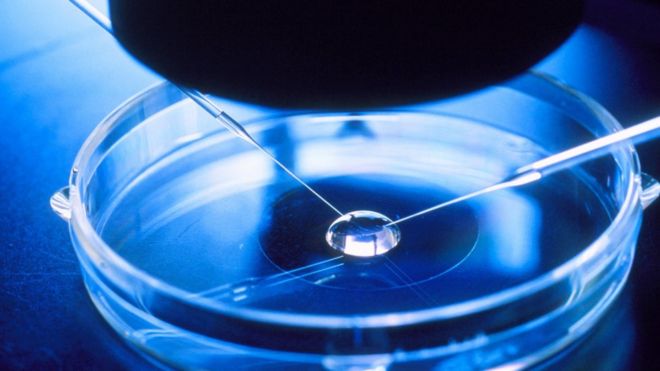
Prof. Aznar: There is no doubt that human life begins with
fertilization of the egg by the sperm. Fertilization initiates the
development and activates the division of the zygote sustaining the
development of that human being live without interruption (Annex 1).
Q: We can call the embryo "One of Us" ...
Prof. Aznar: After showing, in the previous question, the zygote and
the early human embryo, from a biological standpoint, are living beings
of our species, there is no difficulty to say that the embryo is "One of
Us".
Moreover, in this struggle to defend the life of the human embryo,
those who advocate that early human embryo is not a living being of our
species, but a conglomeration of cells without any ontological or
biological value, will have to demonstrate it is as they say, and it is
something that so far nobody has being able to prove.
Q: Why, if science is so simple in showing the very beginning of
human life with the conception, has the non scientific concept of a
“pre-embryo” introduced and diffused?
Prof/ Aznar: The term “pre-embryo” is a semantic trick introduced by
Clifford Grobstein (U.S.) in 1979 and confirmed and disseminated by the
Warnock Report in 1984.
Without a doubt, the term pre-embryo is unscientific, and is solely
intended to deprive human embryo, from fertilization to implantation
consolidation, at about day 14 of life, its living human character, and
in this how to manipulate and even destroy it without any moral
responsibility. This is the only possible justification for using the
term pre-embryo.
Q: What are differences between the embryo before the implantation
and the embryo after the implantation? Is there any change in the
humanity of the embryo? What is the difference between the embryo, the
fetus, and the newborn? Are these differences substantial or not?
Prof. Aznar: There is no scientific evidence to endorse any
biological differences between pre and post implanted embryo. From
fertilization embryo development is continued, so to say that there are
biological differences between before and after implantation is a
semantic manipulation, which was proposed in the Warnock Report,
expressing human life begins with gestation.. This undoubtedly led to
deprive the human embryos of its biological and ontological status to
manipulate them without any ethical responsibility. To hold this
position is to ignore the biological reality of the human embryo and
manipulate language for false purposes.
Q: What do you think about the "One of Us" campaign? Do you think it
is right to ask to stop any research that Imply the destruction of human
embryos?
Prof. Aznar: Of course the goal of the “One of Us” campaign is not
only appropriate, but necessary.. We believe that it is not only
positive for its immediate purposes, to promote a legislative initiative
to prevent the manipulation and destruction of human embryos in the
European Community, but also because the campaign itself is a
magnificent instrument to support the defense of human life; it is
needed to offer arguments that endorse this initiative when requesting
people’s signatures. That is wahy we believe that an important part of
this campaign is to properly train those gathering signatures, for them
to be able to explain in depth the reasons that supports this request to
the people.
Q: Do you think that limiting the research will open new fields?
Prof. Anzar: Certainly, when one initial scientific experience
results immoral, and its lack of ethic principles recommend stopping
that practice, this can stimulate to find alternatives to achieve the
same benefit but ethically.
The main difference between human beings and animals is that the
human is a moral being, it means that humans have to answer to the
ethical implications of the actions taken, and scientists, as human
beings, should respond similarly. Therefore, the negative ethical
evaluation of any research activity should lead to stop it, but it also
must open the door to other ethically acceptable research solutions.
A paradigmatic example of this are the experiences of Shinya
Yamanaka, which led him to get cellular reprogramming and the
regeneration of adult stem cells, which is why he was awarded the Noble
Prize in Medicine in 2012, since his initial motivation to enter into
these experiences were essentially ethical concerns.
Q: Is it right to sacrifice the life of some people to save other people?
Prof. Anzar: According to Kant’s imperative that affirms that human
beings by their own dignity can never be used as a means to anything,
even good, but always as an end for the actions that affect their own
good, we seem to sacrifice embryos to achieve a third human benefit.
Thus, it has no ethical justification.
Historically there are many previous experiences that support this
claim, but I would refer to as a paradigmatic example made by Nazis with
prisoners in concentration camps to experiment medical techniques that
could be useful for German soldiers at war.
Q: The research on embryo stem cells, that kill many human embryos, after many years has not given any practical result ... why?
Prof. Anzar: This question is not correct; first we would need to
differentiate between experimental and clinical results and essentially
observe that on the ethical screen.
Certainly human embryos are a
useful material for biological experiments, especially related to the
development of human life in its earliest stages. I mean, it is
undeniable after years of research with embryonic stem cells these
practices are biologically useful, but it happens that these
experiences, even though useful, are always unethical.
However, from
the therapeutic point of view it is true that only a few clinical trials
with embryonic stem cell are underway and that on the contrary there
are huge numbers, more than 3000, with adult stem cells for therapeutic
purposes.
Q: Adult stem cells: yes to research? Why?
Prof Aznar: Adult stem cells are particularly useful for use in
restorative and regenerative medicine, one of the most attractive
therapeutic possibilities of this century in which we are.
As previously stated currently numerous clinical trials are using these cells.
Essentially
we can say that adult stem cells are the cells used in clinical
practice today, because both embryonic stem cells and adult stem cells
are much more in an experimental phase.
Q: As a scientist, a doctor, a bioethicist, and as a teacher, do you
think that in signing "One of Us", the European Citizens can help
science and help Europe to come out from the crisis?
Prof. Anzar: I think that to affirm the signing of "One of Us" can
help improve the crisis in Europe. However, that is if you think of the
moral crisis, which surely is the foundation of all the crises,
including the economic. I believe that in signing this legislative
initiative, as scientists, doctors, bioethicists or teachers, may favor
an in depth analysis of the moral crisis that exists in Europe, laying
the groundwork, along with other actions, allowing us to start a new
path to go out of it.
Q: So, would you appeal to your colleagues, to your students, to all the people to sign "One of Us"?
Prof. Anzar: As Director of the Institute of Life Sciences at the
Catholic University of Valencia I proposed to the Board of Governors of
the University to campaign to collect signatures from teachers and
students to "One of Us". This campaign is underway and we have over 1500
signatures collected.

 SCIENCE PHOTO LIBRARY


